6.08.2013

Resuscitation

Chuck Norris. VanDamme. Jesus. King. Kingston. Ugandan. Indian. White man. Muzungu.
These are my names.
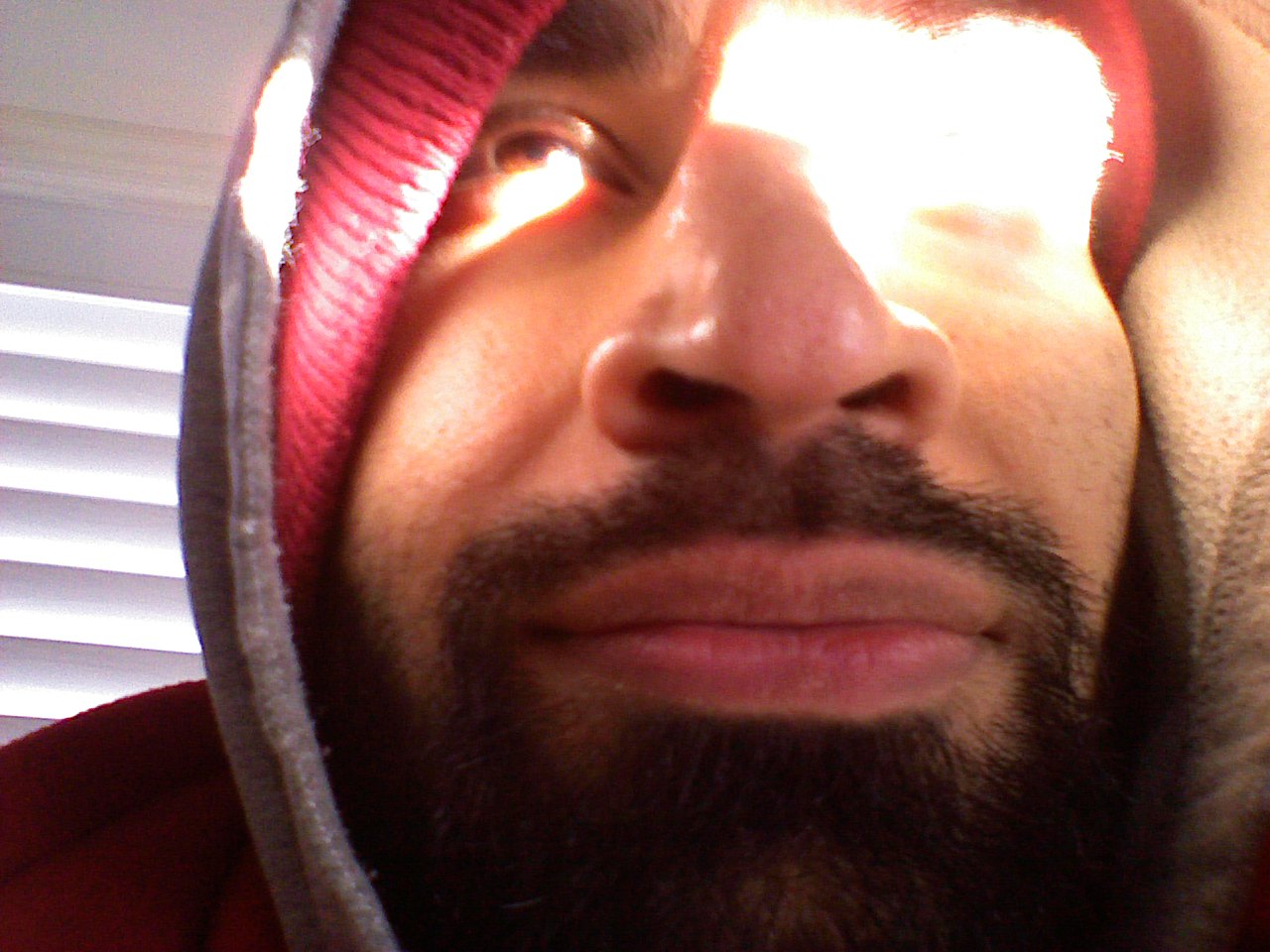
To Ugandans, I am pale, hirsute, and have the nose of a rancher.
Some children openly stare at me - making fun of the way I walk or talk. Others run up to me and hug my legs or hold my hand while they walk with me, trying to match my stride.
Some adults too, laugh about me as they correctly assume that I do not understand most of the Runyankore they speak in the rural southwest. Still many are so kind, generous, and welcoming that I cannot imagine them having more pureness of heart. It is perhaps the case that there is no facial expression more beautiful than a Ugandan smile.
Perhaps I have rediscovered my purpose. I can imagine Leo Tolstoy being jealous of me: “A quiet secluded life in the country, with the possibility of being useful to people to whom it is easy to do good, and who are not accustomed to have it done to them; then work which one hopes may be of some use; then rest, nature, books, music, love for one's neighbor — such is my idea of happiness.” Well maybe not a perfect fit, but good tailors are hard to come by these days.
For over 4 months, I have been living at a "large" Catholic hospital. There have been spans of: weeks without running water; days with no electricity; and hours when Internet access is down. Much of the hospital's staff also lives on the compound, although they are segregated from foreign volunteers of various organizations like mine.  My role is to manage ground operations for a program that trains a new cadre of allied health professionals called emergency medicine practitioners (ECPs). I learned early on that I would need to earn the respect and friendship of these care providers.
The outgoing Program Director worked with me for a few days before she returned to the U.S. Despite her willingness to help me get going, I was left with more questions than answers. A Ugandan-born graduate of Colorado College works as the research director here, although she is currently on leave. She and I have been handling the data collection and management when there are no research assistants. The research that we do here helps make the case to donors that our program is effective. It also helps us to narrow our interventional focus toward the areas of greatest need. We currently have two research assistants, which frees up some more of my time to work on program-related tasks. One of the research assistants is from Idaho, and is here longer-term - at least until July. She seems to fit naturally between the worlds of the locals and the expats. Another, from Burundi, is here until mid-July, but just got here a few days ago and is already having conversations with some of the ECPs in Swahili.
When I arrived, I shared our sex-segregated guesthouse with a well-traveled and severely honest non-traditional med student. He was the last research assistant here before the girl from Idaho showed up. I learned a lot about life here from him: mostly about how to deal with the water or power going out and how to burn trash without killing myself. That was a huge leap for a person who recycled everything that I possibly could. I think that living here, far away from his wife in the U.S. had taken its toll on that guy's well-being. He came off as very abrasive, even though I sensed he was a good guy. I even think I'm starting to get a little rough around the edges myself, although I'm trying not to.
There's another organization here that focuses on addressing childhood malnutrition. For the first few months I was here, the only American from that organization was living on the girls' side of the guesthouse. Just recently, she moved in with her husband, a Ugandan from Rukungiri, in anticipation of their huge wedding ceremony next week. I'm actually a signatory on her wedding license, as I was the only American around at the time. The weeks preceding the wedding (and I am sure the ceremony itself) have taught me a bit about Ugandan culture. They have wedding "meetings" which serve as fundraisers for the wedding. And there is a pre-wedding party called a "kiziki," which they also raise money for, in lieu of gifts, I presume. Some of her colleagues from a hospital in Kenya joined us a couple of months ago to hide out during the Kenyan elections. Things tend to get violent in African nations around election time - particularly in hometowns of candidates and big cities. About two weeks ago, another group from that organization showed up from Boston - not to hide out so much as to work here.
The Belgians were nursing and midwifery students from a Catholic institution that lived in St. Michael's for a few months. St. Michael's is a boarding house near the new chapel on the hospital grounds. (It's strange to me how spending is prioritized around here.) Only one Belgian spent much time hanging out with us for the first little bit, but the other two who are here with her were pleasant and enjoyable company at meals and the occasional card game. I learned a bit about their country and how to play a strange, but fun, Dutch game called "Boonanza" that is all about harvesting beans for gold.
There is now also a group of students from Harvard here. I don't know them well, but they seem like kind and motivated young people. Meals get pretty crowded, as the nuns prepare them for us in Visitor's, which has a decently sized dining room when there are only about seven or eight of us. Now we eat in informal shifts. There's a small group of students from University of Texas Medical Branch that have been rotating through the hospital who also live in Visitor's. For a short while, there was a recent medical school graduate from Nottingham, England placed at our hospital through his school too. When he arrived early and his room in Visitor's wasn't ready yet, I took him in at the guesthouse. He's much younger than me, but still gave the impression of a very interesting and incredibly insightful guy. He's very competitive, loves Lil Wayne and Drake, and hates to lose at card games. His lust for life was inspiring. And I may not have rafted the Nile or done a safari in Queen Elizabeth if it were not for that kid's eagerness to go and have me along. I look forward to doing a bicycle tour with him on my first visit to the UK.
We've had some unique and entertaining personalities come through my own organization as well. One of the first during my time was a visiting resident physician from NYC. He's very sharp and has a fun easy-going attitude. Definitely the type of person born to be an ED physician. I'm sure he could even put out a decent album if he keeps practicing weird (read: Spanish version of Britney Spears and acoustic version of "Sexy and I Know It") songs on the guitar. I learned a lot about balancing work and fun from him. He accompanied me to Masaka when I visited the hospital there. We saw a lot of potential for expanding the program there, but unfortunately that hospital can't do anything without the go-ahead from Kampala.
There was an older couple from Maine that stayed here who were really fun and easy-going. They also contributed a great deal during their time here. The husband, who was an attending physician, gained the respect and admiration of our mid-level providers. His nurse practitioner wife in turn had a lot to offer the nursing students rotating through the Emergency Department. One of the nurses in maternity told them that I am going to marry their daughter someday, which became a fun inside joke...although you never know... They were a great example of how awesome two people can be as partners for the long haul.
We had an attending physician from Virginia too. She was always willing to speak her mind, which made things interesting. And she was not shy about sharing her knowledge either. She helped quite a bit with: evaluating a training that we did for village health workers; training some of the ECPs about treating dislocations; entering data into our database; and taking a malfunctioning ultrasound machine back to the U.S. for repairs. She reminded me of the idea that we all need to keep learning because eventually we have to teach someone what we know. She came down with malaria (while on malarone) at Lake Bunyonye. Not the the ideal way to end a trip overseas, in my opinion.
Another non-traditional medical guy came as a visiting resident. He had all sorts of impressive credentials yet seemed really down to earth. Before he left to do some in-country traveling with his friend, he began a discussion with the medical supervisor about adopting the two orphans that live in maternity. His wife was pregnant with their first child at the time and should have delivered in the last day or two. I was inspired by his willingness to do something for these orphans despite the chaos of: being a resident; his own wife's pregnancy; and the fact that they were both about to move. They are working with an adoption expert to try and push the process forward. It it's anything like the process my friends who adopted a kid from D.R. Congo went through, it's bound to be quite the adventure.
There was a pediatric emergency medicine physician that stayed in our house too. At the time, there was no more space on the girl's side, so she stayed on the side with me. We got along well for the most part, but I think our personalities clashed at times. One day, one of the ECPs went running with us. I could barely keep up with him and we left the doc in the dust. She was only here for about a week, and hadn't yet adjusted to the place, but had been here years earlier and knew two of the oldest ECPs. It must be strange and exciting coming back to a place that you left a long time ago. Some things change while other things stay the same. It's very likely she'll try and come back here and stay a little longer. That seems to be the only complaint that ECPs have with the visiting doctors.
A younger couple came to stay with us in the guesthouse recently. The man was a visiting resident and his wife recently quit her job in public relations. They seemed to integrate well here, particularly the resident, who already had some travel experience. He brought a lot of humor into his style of teaching and interactions with the ECPs in the ED. His wife enjoyed playing with the children who would come by the guesthouse. She took one in particular under her wing and taught him some sign language. The couple spent their anniversary with the mountain gorillas in Bwindi. I won't forget the scene of them testing themselves for malaria on the night before they left.
Another young resident came at the same time as this couple. She did a great job of teaching about online resources to the ECPs and left an iPod behind for them to listen to medicine-related Podcasts. After she left, a woman came to the ED with a basket full of fruit looking for her. The resident donated some money to have the woman's child's nose stitched up (since the mother arrived at the hospital without the money to pay for the ED visit) and the woman came back to thank her. We're hoping more physicians will sign up since nobody is scheduled to come for another two months.
It's fascinating to think that I know people who have had or even may actively have malaria. I may have even had malaria myself, despite being on prophylaxis. Most days I accumulate a mosquito bite or two. Some days I feel extremely tired after not having done much at all. But living in the tropics has its share of physical and mental demands. For example:
My traveling companion and I left in a mutatu at around 8:30. I was annoyed by her badgering to leave "on time" and she was annoyed by me being annoyed. We quickly got over it and began our long journey. By the time we got to Ntungamo, we had to switch taxis. The mutatu we were in had some problems that needed to be fixed beyond the work that was done for the 30-45 minutes we waited when stopped near a garage at the bus park. The conductor charged us 5000 shillings each and suggested we catch another mutatu to Mbarara. Our butts were already sore, but it didn't take long before we were in a taxi and on our way through a good amount of road works. Everytime I take a high-speed trip along the chaotic dirt roads of Uganda, I can't help but think about all the road traffic accident victims we see in the ED. Eventually, we made it to Mbarara around noon and were led to the Swift Safaris tent by some enterprising people waiting at the bus park. We sat in the chairs and waited for the next bus. When it arrived, a large line formed. Somehow, despite being in the back of the line, we managed to get on the bus and get seats. A woman with two little girls sat between me and the window while Anna had the aisle seat. After several hours, we arrived in Kampala's Kisenyi bus park. Anna's driver, Stephen, found us quickly. I said goodbye to Anna and was persuaded into taking a ride in a car with Edward, Stephen's friend who apparently once worked as a guard in Iraq. He proved quite an expert driver and got me to the hotel where I wanted to stay. But he asked for 50,000 shillings and I’d be damned if I paid him that much. I gave him 10000 (all I kept in my wallet) and explained that I needed to use the ATM to get any more than that. He told me to call him before I left Kampala so that I could pay him some more. (Which I never did.) I went inside the New City Annex and asked which rooms were available. The cheapest was a 3 bed room for 60,000 a night. I went back out and unsuccessfully looked around for more appropriate places to stay. Eventually, I hit the ATM and a place called Bon Appetit. Despite ordering an egg roll, they brought me a giant fried ball. When I opened it, there was mashed potato surrounding a boiled egg! After my meal, I went back to New City and got the room. I left in the morning refreshed and within walking distance of the Ministry of Internal Affairs. Once I got there, I waited in a chair under the tent they had set up outside. The office opens at 9 and I was early - eager to finally get my work permit after waiting three months. Once I had waited until 9, I went in the open door and was told to speak to Stephen, who seemed to be the man in charge there. He redirected me to speak with Dennis, the man who I spoke with the last time. Dennis was busy with another applicant, but soon turned his attention to me. I explained that I needed a work visa and showed him my materials. Unsurprisingly, they still found a reason not to accept the application. We had not submitted a registered constitution or permit to operate - something they told me that they had sent to our lawyer some time before I made the day-long journey to Kampala. Irritated, and knowing from experience that persistence was futile, I decided to get an early start on the long journey back to the country.
Days at the hospital vary to some degree, but generally involve me fulfilling requests made of me from: the ECPs; the organization's board of directors; or visiting volunteers. When in the ED or on the wards, I see firsthand that patients in Uganda have a level of problems beyond what we deal with in the U.S. Private hospitals are better than public hospitals here, but: we still run out of paracetamol syrup for the children in pain; we still run out of reagents to test patients for AIDS; splints are still made from used cardboard boxes; and the list goes on. An example of a recent day here:
I opened the Emergency Department, which involves: unlocking the doors and letting the cleaning staff in; pulling the computers out and setting them up for the day; and generating a patient follow-up form to check on the status of patients still in the hospital who came through our ED. After doing the follow-ups, I attended Kristin's presentation on accessing online resources. The ECPs have limited access to computers and even more limited access to the Internet. But the hospital administration has assured me that will change in the near future. After the presentation, I returned to the ED and taught JB how to enter charts into the database we keep of all patients that come through the department. Later, I took our phone follow-up list to a nursing student who was working an evening shift in maternity. We have an agreement with her to call and check up on patients who have been discharged from the hospital within a week and a half of being seen in the ED. While in maternity, I took some time to play with Joseph (one of the two orphans being cared for by the hospital) before putting him to bed. After this, I went to the ED and watched our staff deal with an obtunded ISS-positive (HIV/AIDS) young man whose foley catheter stopped draining and whose urethra was likely torn. The place was literally a bloody mess when we closed at 11.
In the day-to-day we get one little thing done at a time. "Haba na haba," as they say in Swahili. I am learning little bits and pieces of Runyankore, the local language, and making friends with locals at the hospital and in town. It's been difficult to tell whether people truly like me or just see me as an opportunity: perhaps someone that they can, in time, guilt into giving them money. In some ways, parts of Uganda are not so different from what I imagine it's like to be rich or famous in the U.S. And yet at times there is the random act of kindness done by someone who clearly wants no other reward than the feeling of knowing they did something for you. There is a sense of honesty about many Ugandans that many Americans could learn from. Whether it's a good, bad, or ugly truth, astonishingly few people try to deceive.
I'm trying to widen the path I walk between Oscar Wilde's definitions of cynicism and sentimentality. The price of living in such a needy part of the world is a constant test of the soul. And if I could lift every desperate person around me out of poverty, maybe I would. But the sad fact is that I can't. And part of me even knows that I shouldn't do things that way. What does that mean? You do people a disservice by paying them instead of empowering them. It is the lazy way to placate a guilt for being born into relative privilege. I'm proud of our sustainable emergency care model and admire the work that the malnutrition and HIV outreach programs are doing. Every week there are new cases of children with kwashiorkor or marasmus: many of them accompanied by young mothers who don't know the first thing about feeding a baby. So the program staff teach the mothers while they treat the children. And every week there are stories like Mary's: shunned by her nieces and nephews who won't eat off the same plate because she has HIV. People try to kill themselves with organophosphates (poison used by ranchers to kill the ticks on cows) because of the shame and depression that comes with the diagnosis and the disclosure. While HIV is no longer a death sentence, that doesn't keep people from trying to carry it out anyway.
What I want to accomplish is much more than a checkbook can do. Yes, it takes some money to fuel these seemingly grandiose aspirations. And in some ways there is a lot of money already in Uganda. But the money we spend in my program is a means to an end that I feel is nobler than the path most money in this world takes. That's something that I think leaders or rulers all over the world don't seem to get. Two roads diverged and ours is taking the one less traveled-by. One day, at the end of each road in Uganda will be an emergency department with highly-skilled emergency medical providers ready to handle just about any patient that isn't already dead. I would be delusional if I didn't recognize that day is likely to come long after I have gone. Still I keep Prefontaine's words in mind: that success is about the distance traveled and not how far we got.
There are times when I think of giving up. Days when I get so frustrated with demands and disillusioned with the lack of progress. Things move slowly and I don't always accomplish the goals that I set for myself and our program. But wiser and more capable people than I have attempted and accomplished far greater things. Misquoted yet meaningful words of Mohandas Gandhi, the Mahatma:
"First they ignore you. Then they laugh at you. Then they attack you. Then you win."

And if Africa could speak, maybe she'd say this:

12.25.2012

Utah Sunset


The sun is setting on 31 years of my life.

"Finish each day and be done with it. You have done what you could. Some blunders and absurdities no doubt crept in; forget them as soon as you can."

According to my calculations, I've clocked-in over 978 million seconds on this planet. Most of that time has been spent here, in Salt Lake City. Compared to many lives in the wider world, I have enjoyed a relatively charmed existence. My family chose this place for our home, and I have been lucky enough to cross paths with some fantastic people throughout my life here. I will visit with some of my friends (and hopefully my cousin) in a month, when I visit New Jersey and New York. Shortly afterward, I will be making my new home in a place called Nyakibale.

Because I've dreamed some pretty big dreams throughout my life, I have both feasted and bled. It's a given that the longer a person lives, the more that person will lose, despite all of their gains. As the seconds add up on my bill, I pay closer attention to how they are spent. If time is neglected, it can become a great burden. If I lose sleep, it is over what I can do and haven't yet, rather than over what I couldn't or can't. Now is the time for me to do what I can to promote health in rural Uganda.

In my eyes, there is a global shortage of compassion. Cruelty is just a manifestation of cowardice; and so perhaps the best way to deal with cruelty around and within us is to be courageous and encourage it in others. Part of this requires forgiving those who we believe have been cruel to us. There is no grace or honor in spite for choices others have made in a milieu of personality and circumstance. It does not serve a person's soul to be unmerciful. A corrupted heart cannot know love. And the moments of life worth all the rest are often those when we know love better than we understand it. I'm not certain that I ever will understand it. But perhaps that's the point.

My father taught me that I am the master of my reaction to the actions and words of others. Many times I have been tested: people have judged me; used me; abused me; and abandoned me. I have been victimized, but I am not a victim. Despite my best intentions, I unfortunately must admit that I have committed offenses as well. And although I've had to let some people out of my life and leave others, I won't give up on myself. To forfeit self-respect is not an option on my table. I refuse to do it. And although I know we all need each other to some degree, every day I'm learning to live with me; because that's the only person who's guaranteed to be there for every second of victory and defeat. Both usually come with some pain. And pain must be experienced in order to master the art of healing.

Today's weather is our lot, but many other circumstances are not. There will be rain, sleet, and snow; there will be thunder and lightning; there will be hurricanes, tornadoes, and earthquakes all exacting their toll at some point. Sometimes it will be enough to knock us to the ground. We may get desperate and reckless, seeking shelter in our own personal hell. The suffering and self-pity found at the end of that road can too easily be dismissed as a final destination. But we must never forget that failure is just the base camp of another peak. And there is always another peak. And to get there, we must come down. Those of us who seek our own might will rise again: no matter how long it takes or how much easier it seems to stay down, we will triumph if it becomes as necessary as air, water, or food.

We could be carried by the wind or choose to live life on our own terms. Sometimes our choices still cannot guarantee a legacy that does not rely on the charity of history. Character, in my mind, comes from integrity and wisdom. I aim to be a person of integrity: to be true to myself before I make promises that others expect me to keep. It's not a question of whether to play this game: but rather how, and when, and with whom to play it. Every moment is filled with opportunity; it is folly to hold back a burning soul. On the contrary, by moving forward we can empower others to surge beside us, until we have nothing left but a momentum carrying us into the great beyond. I have learned about limits in the world and in the mind. And I know that both of these realms have demonstrated such limits are not set in stone.

There will always be a place in my heart for the Wasatch, the Uintahs, Zion, and memories made in such places across the span of three decades. Indelible are the snow-capped peaks reflecting a full winter moon and the melting tar of wide roads during dry summers. It may seem strange how fond a person can become for such ruggedness. But there is a beauty woven throughout it that can't be denied. No matter how long my departure from this place will be, I know my experiences in Utah are stitched into my scars and buried in my wrinkles. Absence supposedly makes the heart grow fonder. However, I think that is only one of many possibilities for a heart that spreads its wings.

"Tomorrow is a new day. You shall begin it serenely and with too high a spirit to be encumbered with your old nonsense."

From this blanket of darkness, the sun will rise again.

=-=-=-=-=-=-=-=-=-=-=-=-=-=-=-==-=-=-=-==-=-=

As usual, in lieu of presents for my birthday, I ask that those interested please re-direct your generosity. Although in a sense I will be working for this organization, the funds you donate will go toward a program that desperately needs funds in the operating budget. If interested, you may follow this link to donate and learn more about GECC:

http://globalemergencycare.org/donate/

Thank you to everyone who has touched my life. I hope that I've been able to give you something worthwhile in return.

Peace and happy holidays.

10.19.2011

Testing Education for All as the Answer to the Global Economic Crisis

We have problems in our country. That's no secret. But we also have solutions. We've exported American ingenuity and changed the world throughout our relatively short history as a nation. We’ve also imported many of our commodities from the lands of impoverished people at artificially low prices - consuming and generating waste disproportionate to the global population. As we approach the Thanksgiving Holiday in the United States, it seems appropriate to sincerely contemplate what it means to be thankful for what we have. Most of the rest of the world is still “the 99%” compared to the U.S. Nearly all of the more than 60 million children who don’t have the opportunity to attend school live in the developing world. In the great American tradition of sharing our ideas, ensuring a basic education for the world’s least privileged people can be a way of paying our dues.

It would serve every American well to at least entertain the notion that occasionally our government's foreign and domestic policies may have contributed to problems like poverty, corrupt governance, and precipitous environmental change. And we should certainly consider that if we didn't spend a single dime on the wars in Iraq and Afghanistan, we might not have a federal deficit today.

How much has war cost us? The U.S. budget for defense was nearly 1/4th of our total federal budget in 2010. The entire education budget was roughly 1/6th of that amount. And the entire amount of money spent on all foreign affairs operations was less than 1/3rd of the tiny amount we spent on education. What could have prevented our engagement in Iraq and Afghanistan? Ensuring that the people of those nations had the tools they needed to not be exploited and suppressed by terrorists and tyrants in the first place. Chief among these tools is an education.

Funding education for the poor isn't pouring tax dollars down a rat hole. There is a definite national interest in promoting basic education in the darkest corners of the world. Part of the plan is to help struggling nations use internal resources to establish and sustain their own education infrastructure. This is what the federal government does for state governments. But some states lean quite heavily on federal support in order to keep state taxes and services at a minimum. The result of this tactic is no surprise. Regardless, these are separate (yet analogous) issues that need to be solved at different levels of government. And we need to hold the appropriate leaders accountable for tackling both problems with action, rather than finger-pointing and rhetoric.

The cost to provide basic education for a brain in the developing and emerging world is a fraction of the cost of an education in our own country. With a mere $375 million (equal to about 1/400th of the 2010 U.S. education budget) pledge from the U.S, the multilateral Global Partnership for Education aims to halve illiteracy among school age children in 20 countries over five years and enroll 25 million more children in primary school. The payoff will be long-term stability in global regions of American economic interest and the possibility of having a generation of Americans that knows nothing of war. The less we spend on standing armies sent to die on foreign soil, the more we'll have to support the next generation of thriving innovators at home. We could be on the verge of a modern American renaissance. All we need to do is invest in human potential. It will inevitably restore and provide security and distinction to our nation as the premier supporter of an intelligent global economy and chief steward of worldwide peace.

1.29.2011

“He Was All of Us”

David Kato, a gay rights activist known as “grandfather of the kuchus,” died because of anti-gay hostility encouraged in Uganda.

A culture of intolerance can lead to violent consequences. It is far too easy for those in a country where anti-gay attacks are common to forget that only those without sin may cast the first stone. And it is progressing towards legitimacy under Ugandan law. This is why Brenda Namigadde must be granted asylum by the UK.

Stop Deportation of Brenda Namigadde: http://www.allout.org/brenda/getequal

In an official press release, UN High Commissioner for Human Rights Navi Pillay warned that the ‘Anti-Homosexuality Bill’ would bring Uganda into a “direct collision” with established international human rights standards aimed at preventing discrimination.

Pillay went on to say: “The bill proposes draconian punishments for people alleged to be lesbian, gay, bisexual or transgendered – namely life imprisonment or, in some cases, the death penalty.”

It also contains a provision that could lead to up to three years in prison for anyone who fails to report the identities of any lesbian, gay, bisexual or transgendered individual they know – including members of their own family – or who overtly supports the human rights of lesbian, gay, bisexual or transgendered people, within 24 hours.

Val Kalende, the chairwoman of one of Uganda’s gay rights groups: “The Ugandan government and the so-called U.S. evangelicals must take responsibility for David’s blood.” In 2009, preacher Scott Lively and two other anti-gay ministers from the U.S. held a conference in Uganda where they condemned homosexuality. Lively recently responded to Kato's death by saying that he may have been "killed by a 'gay' lover." Lively is known for his book entitled "Pink Swastika," which argues that the violent acts of the Nazis were driven by homosexuality. He apparently runs a coffee shop popular among truant schoolchildren in Massachusetts, and at one time employed a convicted sex offender there.

Lou Engle, who apparently wants to "save" Ellen DeGeneres, visited Uganda as well - to preach against "the threat of homosexuality" at a prayer rally that served to lobby for the proposed bill.

Lou's Prayer for Ellen: http://www.youtube.com/watch?v=1nr8wGZd9Dw

"I'm not homophobic," says Pastor Carl Ellis Jenkins, from Georgia, "But I can glean from the Bible that God is not pleased with homosexuality." His church, through which he preaches the virtue of "the moral change and economic change that Christ can give if you are obedient and dedicated to the word of God,” is expanding to over 80 branches in Uganda and Kenya. "God did not put us here as judgers. The problem is we use God's word to express our own intolerance and miss the spirituality. I want to focus the heart and mind toward spiritual things." Jenkins doesn't seem to be totally clueless, but he cannot wash his hands that easily of Kato’s blood.

Every religious tradition is founded on love, not hatred. Our nation has historically been considered a beacon for protection of personal liberty and freedom of speech. But these are powerful tools that must be handled with care. We've had our share of issues and still have a lot of work to do in the United States, but exporting the most irresponsible elements of hate into places like Uganda, in the name of religion, must not replace what truly makes us great.

HRC - Stop Exporting Hate: https://secure3.convio.net/hrc/site/Advocacy?cmd=display&page=UserAction&id=1013


4.18.2010

Americans Need to Support Full Funding of the International Affairs Budget

Even as Haiti, Kyrgyzstan, and other developing areas of the world are struggling to recover stability from the chaos of recent natural and social events, we in the U.S. continue to deal with problems inside our own borders. Recovering from our own natural and social problems presents persistent concern; but as we learned from 9/11 and the wars that followed (and continue on to this day), our foreign and domestic policies need to work together as an integrative system. Our modern global society demands nothing less.

President Obama understands that an investment in stabilizing other nations provides a protective benefit for our nation that defense is incapable of providing alone. His request for $58.5 billion to be allocated to the U.S. International Affairs Budget will help reinforce the support of the three pillars essential for our national security (defense, diplomacy, and development) as noted consistently by Secretary of Defense Robert Gates while working under both former President George W. Bush and now President Barack Obama. This is not a partisan issue, as we have seen support from both major parties in the House and Senate last December through a letter to President Obama requesting robust international affairs spending. General Petraeus also called for the same increased support in development on a recent visit to Brigham Young University; namely to help farmers in Afghanistan. These funds would keep in operation programs working on U.S. front lines in Afghanistan and Iraq. The programs are very much like Utah’s Ouelessebougou Alliance, which does development in Mali, Africa, focusing primarily on public health and education. However, there is currently a motion in the Senate to cut spending by $4 billion.

For Americans, funding programs sustained by the International Affairs Budget has a relatively small cost. The International Affairs Budget represents less than 1.5% of the total federal budget, as compared with defense, which comprises about 25%. For the countless lives to be saved, alliances to be forged, and communities to be shaped, $58.5 billion is still a very significant investment. The programs have worked in the past, but they need continued support to flourish. Secretary Gates has noted that there need to be more resources devoted to the institutions of diplomacy and development to complement his role of leading our defense. Senators Kerry and Lugar have both responded to this call in non-partisan fashion by writing a letter to Chairman Conrad and Ranking Member Gregg of the U.S. Senate outlining the need for full International Affairs Budget funding.

As a Congressional District Leader for the One Campaign, an international grassroots organization dedicated to the eradication of poverty and preventable disease, I strongly urge all Americans to contact our Senators and ask them to support full funding of the International Affairs Budget for the 2011 Fiscal Year by signing on to the Kerry-Lugar letter.

To send a message to your Senator, please visit One.org by following the direct link here: http://www.one.org/call/signup.html?cp_id=77&mode=senate

2.02.2009

On the Value of Microcredit

On January 26th, Muhammad Yunus announced the milestone of reaching 100 million microcredit loans. At such a crucial time, many newspapers missed reporting this. But Monday's Deseret News editorial entitled "An Answer to World Poverty" highlighted and explained this achievement.

Yunus began with personal loans to 42 fellow Bangladeshis in 1974, totaling $27. Using small loans to invest in small business, borrowers without collateral paid them back; a virtual impossibility before Yunus founded Grameen Bank - the seminal microcredit institution. Continued borrowing showed a high rate of repayment.

Poverty restrains lasting peace worldwide. Yunus and Grameen Bank won the 2006 Nobel Peace Prize for promoting economic independence. As the Deseret News editorial stated, picturing the sea of faces at the President’s inauguration, and multiplying by 100, can demonstrate the number of lives microcredit has lifted from poverty.

Conflict in places like Gaza, Iraq, and Sudan, supplies many discouraging headlines. The worldwide financial crisis has caused many to despair. Yet this story counters that tide. While conventional banks are failing, the bank of the poor - the only one that would lend money to these people - helps millions to prosper. This is something we cannot afford to ignore.

12.09.2008

This is Not About Religion.

Recently, the Becket Fund for Religious Liberty took out a page of the New York Times that stood in defense of the LDS Church's position on Prop 8. It went even further to accuse "many" of the protesters of being mob-like and using intimidation tactics instead of reasonable persuasion. While some people did not represent their dissent in as honorable of a way as they could have, this is a slap in the face to many (i.e. the majority of) people, including myself, who were careful to be as diplomatic as possible. Quite frankly any prejudices I may have voiced at the time have always been flaws of my own and were not representative of any cause or movement. In fact, there are people within the LBGT movement who are quite religious whereas I am not.

The original NYT ad can be seen here.

If you would like to take action, you can use the webform here to write a letter.

And my own letter to the NYT and the Becket Fund is posted below:

It is arrogant and cowardly for anyone to mount an attack on a minority group of our society. And it is irresponsible to claim that a minority of that group with extreme behaviors and gestures represents the group as a whole.

The LBGT community and its supporters believe that we should all be able to live peacefully, and equally.

Using religion as a means to prevent that from happening is absurd. The whole point of religious institutions is to bring people together and not tear them apart. Open up any history book - even scripture - and you will see how well that has worked in the past. You will also see glorification of what we would now consider terrorism.

But people who choose to be religious have every right to do so as well as every right to voice their opinion. We do not consider all who practice religion to be terrorists. It is, as you state in your letter, important for the health of democracy to be inclusive of all ideas and opinions. And especially not to allow them to be misrepresented.

Additionally, for the sake of democracy, we must not allow any group - be it minority or majority - to take away the inalienable rights of others simply to impose upon them a sectarian moral code. It is unethical to treat anyone as second-class citizens (an expense to their liberty) as it is to force them to live in fear; something that both the LDS and the LBGT communities have been familiar with. Your freedom of speech ends where hatred of people for what they are begins.

Yes, a few people have fought dirty on both sides. But that does not give license to you or anyone else to denounce an entire movement which strives for peace, harmony, and love just as much as yours probably claims to. This world is running out of room for that kind of behavior and I suggest you learn how to live within it instead of "above" it.

11.24.2008

First Things First...

President-elect Obama is about 2 months away from his inauguration. No doubt he is hard at work preparing what we all anticipate to be one of the most historic speeches in the annals of our nation's government.

Why not help him write it?

The One Campaign has sent out a call to action:
President-elect Obama will have historic opportunities to bring hope and dignity to millions currently suffering from poverty and preventable diseases, such as malaria and HIV/AIDS.

We can make a difference by showing our support for an inaugural affirmation of Obama's pledge to fight poverty and preventable diseases worldwide, and for an FY2010 Presidential budget request that puts the U.S. on track to meet Obama's historic commitments to the world's poorest people.


They have set a goal for 50,000 people to add their name to a petition for President-elect Obama to make clear his plans for supporting measures to prevent and treat extreme poverty.

You can sign the petition by clicking here.

And you can add your own statement as well, if you wish. Mine is posted below:
"By stabilizing the poorest regions of the world, we can ensure greater safety and stability at home. Though it is within the American ethic to do this for the benefit of our neighbors, there is a great ancillary reward for our own nation and its allies. Current defense spending is misguided, unaccountable, and exacerbates poverty and social inequities in our own country. We need to take on a strategy of goodwill and peace that contrasts with the diplomatic failures of the previous Presidential administration. Rather than destroying infrastructure, we need to focus on re-building it in failed states, which as you know are hotbeds for terrorism and piracy. Instead of merely using unchecked military force, we need to work collaboratively to ensure majority global support."

Please at least sign the petition and show your interest in helping the world's poorest people. And if you can, send your own personalized thoughts or pass the message on to friends. Get involved early and often. Be well, and do good.

11.21.2008

My Energy Plan

Earlier today, I visited a website for the Energy & Environment Transition Team of Barack Obama's upcoming administration. It has a video and a short blurb about what it is and that they want to hear people's ideas.

I submitted this brief message:

"While I can appreciate a shift toward what are considered cleaner energy sources, I feel that the Obama administration needs to remember that nuclear energy is not clean energy. As a resident of the state of Utah, it may be more apparent to me that nuclear waste dumping is a real issue and one that is forcing greater pressure on us if we encourage more dependency on nuclear energy. Instead, I concur with the video that we should take a more grassroots approach to solving the energy crisis. We can do this by implementing truly green solar, wind, and hydro projects on the local level via state and federal subsidies which can be recouped through temporarily reclaiming energy production surpluses. This would also generate needed jobs and provide greater national security through diversification of resource distribution and availability. Please contact me if you have questions or comments regarding this proposed strategy."

Please let me know what you think of this plan and some potential problems that might be faced in theory or with implementing it. Also, please go to the website and share your opinion on what you think needs to be done. Thank you.

9.17.2008

Voting Can Be Dangerous: Use the Buddy System

While this blog is non-partisan, it does represent a particular world view. The philosophy of this blog is informed by a belief in the virtues of: a reverence for the natural world, both within and without; being able to live peacefully with our neighbors, immediate and global; and appreciation of art, which enables expression of ideas that can't materialize as powerfully, or even at all, otherwise.
"Politicians use the truth to tell lies, while artists use lies to tell the truth." This, of course is an extreme statement, but it does have an artful touch to it. Some in politics have a natural talent for knavery. Yet many politicians are just as true to their duties as you or I; except our bosses tend to demand more of us than we do of them.
When we are called upon to exercise our democratic right to vote, let us not take for granted what some have died for. When we are in that booth, just ourselves and a machine, let us remember the reason we have our right to vote in the first place: to hire the right people for the job: the privilege of working for us, the people of the United States.
But then we cannot leave the affairs of the state in the hands of those who may contrive to exclude others most fit for the job: especially when we, the caretakers, have all but demanded they be given free reign. No, we must remind our public servants of their role and behave as only the most benevolent masters would without abandoning them to their own folly.
When the Republicans and Democrats are the only real voices for the American people is when I will defend them. But where was that voice when the right to declare war was ceded, fully and "legally," to the President? Where are the voices now in protest of our unsustainable and toxic energy plan? Tyranny is not the vestige of the underdogs. The two major parties have been controlling executive access in this country and doing so with such fervor that competitive exclusion has slipped into an institutionalized oligarchy. Furthermore both of their current offerings do not respect the need for peace and neglect the fragility of our biotic communities. And you, the American voter, know this full well.
In the United States, our electoral process is set up to favor majority parties. It marginalizes smaller campaigns or even big campaigns through non-conventional routes. The two big partisan beasts strike fear in the hearts of conservatives and progressives alike because we are more concerned about how they differ from each other than how they differ from what we really want.
From my experience in speaking with average people about voting for third-party candidates, they've been incredibly supportive of their campaigns, but apprehensive about actually casting a ballot. Some see "spoiling" as an immediate threat. Others see a third-party vote, even if it is aligned with their true beliefs, as still a "wasted" one.
Accusations that elections were "stolen" by legitimate opponents are preposterous. There is a great arrogance among major parties who believe that third-parties exist solely as a tool to tip an election from choice A to choice B. Third-parties are not yet taken seriously as a legitimate alternative choice. But some new ideas have given the American voter the possibility to do just that.


Enter Vote Pact, and VoteBuddy, two websites that are promoting basically the same concept of forming an alliance with a double from the "other team." You find someone you know well, a close friend or a family member, and you both agree to defect from the major parties. In some instances, you might find a pair that votes for the same third-party candidate. Essentially, you are agreeing to disagree with the status quo and, in a way, are celebrating your common ground. The net effect: there is no "spoiler" and the major party candidates are still relatively where you both left them.
Another site, from The Center for Range Voting, illustrates the advantages of a different style of election. It too promises to level the playing field and eliminates the controversy and hullabaloo of third-party participation in elections. Dubbed the "Hot or Not" method to voting, it has been featured in publications like Technology Review, Salon.com, the New York Times, and Newsweek. A sample ballot is displayed below.


You were probably thinking only artists could be this creative. Of course there is the possibility of cheating with the buddy system. This is why you truly need to know the person you are making your pact with and trust them. If anything, this solution for third-party voting is a test of relational skills. And while range voting isn't quite ready for prime time, it seems like a good institutional solution for storming the bipartisan castle; although it's not as unpredictable and exciting as the other, currently possible method.
One of the greatest things about humans is our ingenuity. While we certainly don't have a monopoly on ideas in this country, or always have a good one (see: past two Presidential elections), we are always looking to solve problems. People wanted to vote for third-parties but were afraid to "take away" a vote from the "lesser of two evils." Now we are shown the way to take two votes at a time from the "evil of two lessers" and give them to the candidates who truly paint pictures of nature, peace, and art.

9.11.2008

Myself by Edgar Albert Guest

I have to live with myself and so
I want to be fit for myself to know.

I want to be able as days go by
Always to look myself straight in the eye;
I don't want to stand with the setting sun
And hate myself for the things I have done.

I don't want to keep on a closet shelf
A lot of secrets about myself
And fool myself as I come and go
Into thinking no one else will ever know
The kind of person I really am,
I don't want to dress up myself in sham.

I want to go out with my head erect
I want to deserve all men's respect;
But here in the struggle for fame and wealth
I want to be able to like myself.

I don't want to look at myself and know that
I am bluster and bluff and empty show.
I never can hide myself from me;
I see what others may never see;
I know what others may never know,
I never can fool myself and so,
Whatever happens I want to be
Self respecting and conscience free.

Come September


This is perhaps the most important public address of our time regarding peace and social justice. Those who are unfamiliar with Ms. Roy should be all the more encouraged by watching this speech to learn more about her life and mission. Please share your thoughts and this video with all you can.

For more information and to see a powerful documentary based on this speech: weroy.org

1.22.2007

Ice, ice! Maybe?

A graph - submitted for your perusal.
Now, what does it mean? The bars show average global temperature measured for the past 126 years. Within the scope of recorded data, we have seen an overall increase in temperatures. The most rapid of such has occurred in the past 30 years. Global temperatures have increased by .7 degree Farenheit in the past century and the data coincides with drastic, visible environmental changes. Politicians are finally admitting that the claims scientists have made for decades may have been right afterall.

For those of you who desire hard evidence, look no further than the arctic. Ice there is thinning at an alarming rate according to the author of an article in the journal Geophysical Research Letters. By 2040, summer ice could disappear altogether if greenhouse emissions are maintained at the current rate. The ice doesn't refreeze in the winter, suggesting that ice shelves and summer ice platforms that disappear now are gone for good. This is bad news for threatened species like the polar bear who depend on the ice to be there so they may hunt. Last year, scientists encountered several dead polar bears that had died of starvation.

Melting ice also creates a positive feedback loop that works to eliminate itself at a greater rate. Ice sheets in the arctic act like a giant mirror for the sun, reflecting away much of the radiation to keep the region cool. As the ice sheets decrease in size, more of the sun's radiation is absorbed by the water of the arctic sea that takes their place. Water of higher temperature exposed to the remaining ice causes further melting and thus increases the rate of ice depletion in the arctic. Some computer models have predicted that the entire ice cap will melt by the end of this century. Most models show that the U.S. coastline will become swampland by then.

The only way to prevent the deaths of several species, destruction and property damage beyond calculation, and off-the-chart climate change is to introduce harsh restrictions on greenhouse gas emissions. This can very effectively be done through policy if policymakers are encouraged by constituency. It can also be implemented directly by reducing reliance on power from coal-burning power plants and using public transportation whenever possible. Power and gas consumption are two of the main culprits in production of greenhouse gases and must be controlled. We need to take responsibility and adopt an ethic of stewardship. Industrial pollution must be regulated in an even more stringent manner. And this can be done if we petition lawmakers to do so.

By political and direct action, we as individuals have the power to change the fate of our world.

Much of the data included in this blog post was cultivated from the Center for Biological Diversity and the National Geographic Society. Both are self-sustaining, eco-friendly information sources which I highly encourage people to use.

12.21.2006

The Last Minute Gift That Keeps on Giving


Buy a cow. Or two! Oxfam America is the foremost organization helping people around the world to escape poverty by providing the necessary education and resources to make them self-sufficient.

This Nareshmas, treat your loved ones the way they deserve to be treated by sending a token gift in their name. The gifts symbolize how the money will be used by the organization and range in values under $25 all the way up to $7500.

Whoever you're shopping for, show them that you know they care about helping those in need. And do it with the knowledge that some of the credit really does go to you for choosing the gift for them. In essence, it is a gift that gives to everyone!

https://www.oxfamamericaunwrapped.com/

Happy holidays.

10.11.2006

=

Today is National Coming Out Day. Here's a great video from the HRC:

9.08.2006

Gold in Grain

Here's a poem I'd like to share:

When you see the poor, the cops aren't far behind.
But to the crimes of the rich it seems the police are blind,
And if that's who they followed, there'd be less crime;
There'd be fewer poor at the same time.

Steal a person's needs and so goes benevolence
To make a person worse off just doesn't make sense,
And to do it for greed is the ultimate sin;
In time you will miss your abused kin.

Brothers and sisters is all that we are;
Living next door or in lands afar.
"Give us this day our daily bread."
Remember what those poor wise men said.

9.02.2006

The Day for Darfur is Coming

Below is a letter I received from one of my friends. I hope that some of you reading this will have a chance to attend.
----------------------------------
Darfur: ‘all of our nightmares have become realities’


A top U.N. official announced on Monday that unless the international community takes immediate steps to stop the violence, the Darfur region is within weeks of “a man-made catastrophe of an unprecedented scale."

For an on-the-ground perspective on the crisis unfolding in Darfur and eastern Chad, join us next Tuesday, September 5, from 12:00 to 1:00 p.m. EDT for an online discussion with Theo Murphy, an Amnesty International researcher who recently returned from eastern Chad. Learn how you can help ensure protection for those who've been displaced by violence in the conflict and how you can get involved with activities surrounding the global Day for Darfur on September 17th.

We look forward to your participation in next week's discussion.

Go here to find out more.

Best Regards,

Scott Edwards
Country Specialist for Sudan
Amnesty International USA